Loan Officer Resume Example

A loan officer resume must prove two things: you are licensed to originate and you close volume. Managers check the NMLS number, then units and dollars funded. They also look for your states and how much of that volume you sourced yourself.

The Sample resume below belongs to a mortgage loan officer with seven years between a credit union and an independent lender, originating conventional, FHA, VA and jumbo loans. Its bullets are written the way a branch manager reads a production report: units and volume by year, pull-through rate, turn times, referral sources and the share of business that came from past clients. Each one also shows how the result was earned, whether through realtor partnerships, pre-approval discipline or clean files that underwriters trust.

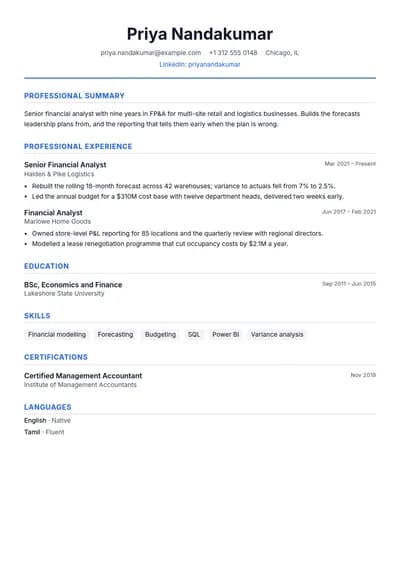
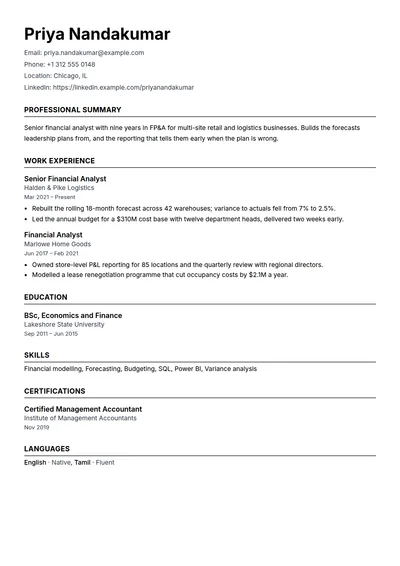
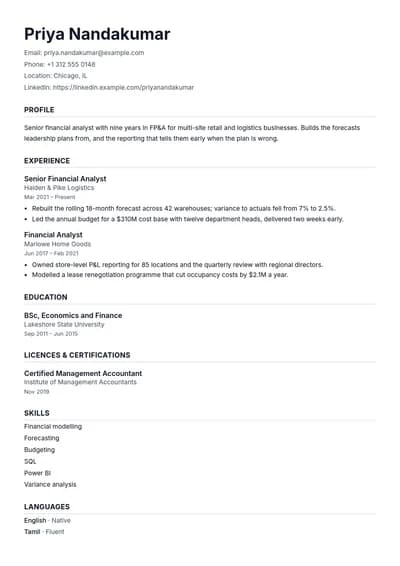
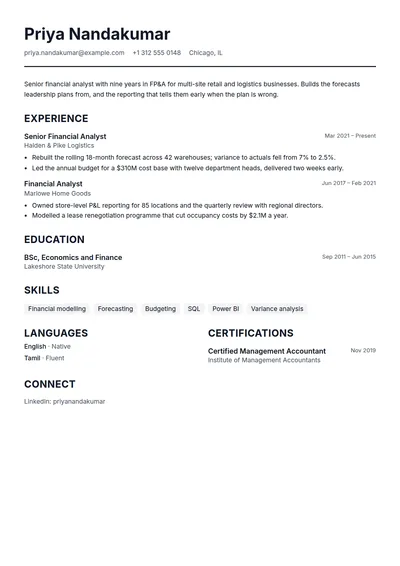
Tune the page to the lender. A retail bank or credit union wants member service, cross-sell and compliance; an independent mortgage company wants self-sourced purchase volume and realtor relationships; a consumer lending desk wants auto, personal and small business loans. Adjacent roles are covered in the financial analyst example and the bank teller example. The Professional template gives a license line and a production summary the space they need.

Updated . The person and employers in this Sample resume are fictional.

Loan Officer sample resume

Alicia Marchetti

Mortgage Loan Officer, NMLS Licensed in NC and SC

Charlotte, NCalicia.marchetti@example.com(704) 555-0127

Summary

Mortgage loan officer with seven years of experience originating purchase and refinance loans, closing $48M across 162 units in 2025 with a pull-through rate of 78 percent. Self-source most volume through eleven realtor teams and past-client referrals, and keep files clean enough that underwriting turns them in under four days. Licensed in North Carolina and South Carolina, conventional, FHA, VA and jumbo.

Experience

Mortgage Loan Officer, Westbrook Home Lending

– Present

Charlotte, NC

  • Closed $48M in residential mortgages across 162 units in 2025, up from $31M in my first full year, with 71 percent of volume from purchase business.
  • Built referral relationships with eleven realtor teams by delivering fully underwritten pre-approvals within 24 hours, so their buyers win contracts.
  • Hold a 78 percent pull-through rate against a branch average in the low sixties by qualifying borrowers carefully before locking.
  • Cut my average clear-to-close time to 19 days by collecting complete documentation up front and reviewing conditions with processing every morning.
Mortgage Loan Originator, Harbor Oak Credit Union

–

Concord, NC

  • Originated an average of $1.6M a month in first mortgages and home equity loans for credit union members, mostly from branch referrals and walk-ins.
  • Ran monthly first-time homebuyer seminars at three branches that produced 46 closed loans over two years.
  • Kept a zero-finding record in three internal compliance audits covering disclosures, timing and rate lock documentation.

Education

B.A. in Economics

Mecklenburg Valley University, Charlotte, NC

Skills

  • Conventional, FHA, VA and jumbo origination
  • Purchase and refinance
  • Pre-qualification and pre-approval
  • Realtor and builder partnerships
  • Pipeline management
  • Encompass LOS
  • Desktop Underwriter and Loan Product Advisor
  • Rate locks and pricing
  • TRID and RESPA compliance
  • Credit analysis
  • Income and asset documentation
  • Past-client referral marketing

Certifications

  • Mortgage Loan Originator License (NMLS), North Carolina Commissioner of Banks,
  • Mortgage Loan Originator License (NMLS), South Carolina Department of Consumer Affairs,
Start yours from this example

Bring your own resume or start blank, then tailor it to each posting in about two minutes.

Use this example

Templates for the loan officer resume

All templates

How the resume changes with experience

The same loan officer resume, written at three levels: a summary and three bullets for each.

Entry level

Zero to two years, or a first role in the title

Newly licensed mortgage loan originator with two years as a loan processor and a track record of clean files, moving into an originating role at a retail branch.

  • Processed a pipeline of 35 to 40 active loans a month for three originators, gathering conditions and preparing files for underwriting.
  • Passed the SAFE national exam on the first attempt and completed the state licensing education while working full time.
  • Flagged an income calculation issue on a self-employed borrower before submission, saving the file from a late-stage denial.

Mid level

Three to seven years, owns a process or a workload

Loan officer with five years of experience closing $30M or more a year in purchase-heavy volume, mostly self-sourced through realtor partners.

  • Manage a pipeline of 25 to 30 loans in process at any time.
  • Grew annual funded volume from $18M to $34M in three years.
  • Turn down deals that will not survive underwriting rather than lock them and lose them later.

Senior

Eight years or more, leads people, budgets or programs

Producing branch manager with twelve years in mortgage lending, responsible for a branch of six originators and personal production of $40M a year.

  • Lead a branch of six loan officers, two processors and a loan officer assistant producing $180M a year.
  • Recruited three top producers from competing lenders, which doubled branch volume in two years.
  • Set the branch's pre-approval standard, requiring documented income and assets before any letter goes out.

Skills to put on the loan officer resume

Hard skills

NMLS license and state registrations
You cannot take an application without it, and managers check the NMLS number before they read another line.
Funded volume and units
Production is the currency of the job, and a manager can size the compensation plan only if you give yearly units and dollars.
Loan programs
Naming conventional, FHA, VA, USDA or jumbo tells a lender which borrowers you can serve and which training you will not need.
Loan origination systems and automated underwriting
Encompass, Desktop Underwriter and Loan Product Advisor appear in most postings, and prior experience shortens the ramp.
Pull-through rate
It shows you qualify borrowers before locking, which protects the lender from hedge costs and shows respect for the operations team.
Referral partnerships
Self-sourced purchase business is the most valuable kind, and managers want evidence you can build it without leads handed to you.
Compliance knowledge
TRID timing, fair lending and disclosure rules carry real penalties, and a clean audit record reassures compliance officers.

Soft skills

Responsiveness
Realtors send buyers to the loan officer who answers on a Saturday, and managers know that is where referrals come from.
Explaining terms simply
Borrowers who understand their loan close on time and refer friends, and this skill comes up in nearly every interview.
Working with operations
Processors and underwriters decide how fast your files move, and originators who treat them well get their loans funded first.
Resilience
Rate swings and lost deals are constant, and branch managers want people who keep prospecting through a slow quarter.

Mistakes that cost loan officer interviews

  1. No NMLS number or states

    Every lender must verify your license before an offer. Put your NMLS number and the states you hold in the headline or contact line so the recruiter does not have to ask.

  2. Volume with no timeframe

    Fifty million in closed loans could be one year or a career. State units and dollars per year, and name the mix of purchase versus refinance, so a manager can compare it with the branch.

  3. Leaving out where the business came from

    A manager wants to know whether your volume will follow you. Say how much was self-sourced through realtors, builders and past clients and how much came from company leads.

  4. Skipping pull-through and turn times

    Closing volume is only half of production. Pull-through rate and days to clear-to-close show you qualify borrowers honestly and work well with operations, which matters as much as sales.

  5. Forgetting compliance

    Loan officers who have never had an audit finding should say so. Lenders carry the regulatory risk for your files, and a clean record is a hiring advantage.

Questions about the loan officer resume

Where do I put my NMLS number on a resume?

In the headline or directly under your name, in the form NMLS 123456, along with the states you are licensed in. Repeat it in a licenses section with the issuing regulator and the year you were first licensed.

How do I show production as a loan officer?

Give closed units and funded dollar volume per year, the purchase and refinance mix, pull-through rate and average days to close. If volume dropped in a rate-shock year, show the units or the market share instead of hiding the year.

Can I list volume from a lender I left?

Yes, as long as the numbers are accurate and you can back them up with production reports or a reference. Managers expect to see prior volume; leaving it off looks worse than a modest number.

What should a new loan officer resume focus on?

Your license and exam results, then anything that proves you can find and serve borrowers: processing or underwriting experience, retail banking sales, realtor contacts or a prior sales role with targets you beat. The entry variant above shows one approach.

Should a loan officer resume be one page?

Usually. Production by year, licenses, programs and systems fit on one page, and branch managers rarely read a second one. Add a page only if you have managed a branch or team.

Every application goes out fitting the job.

Paste a posting, get a resume rewritten for it in two minutes.

Tailor your resume — free

Free to start. No card. Same price on web, iOS and Android.