Early Childhood Teacher CV Example (New Zealand)

Centre managers and kindergarten associations in New Zealand hire early childhood teachers on two facts before anything else: whether you hold a current practising certificate from the Teaching Council, and whether you are fully certificated or still provisional. Those two words decide the centre's funding band and its certificated-teacher ratio, so put them in the headline. After that, the manager reads for the age group you have taught, how you plan from Te Whāriki, and whether your learning stories and assessment would stand up in an ERO review.

The Sample CV below is for a fully certificated kaiako with six years in a community kindergarten and a privately owned early learning centre in Christchurch. Her bullets show the work a centre is judged on: curriculum planning across the strands of Te Whāriki, learning stories that whānau actually read and respond to, a transition-to-school programme built with the local primary school, an ERO review that came back with a long return period, and the mentoring of a provisionally certificated teacher through to full certification.

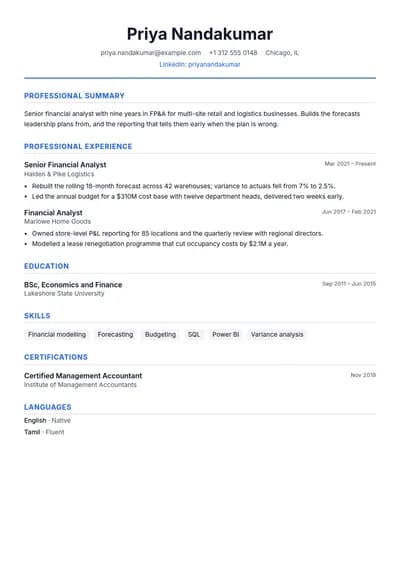
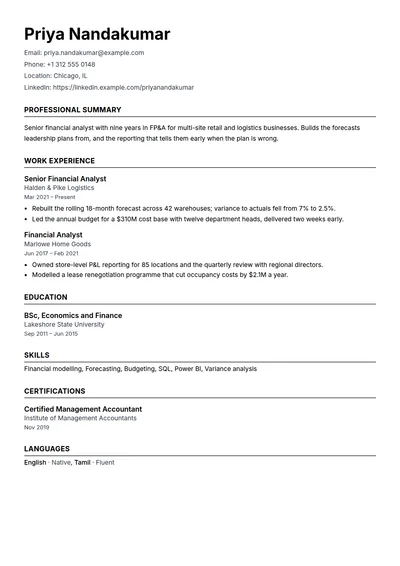
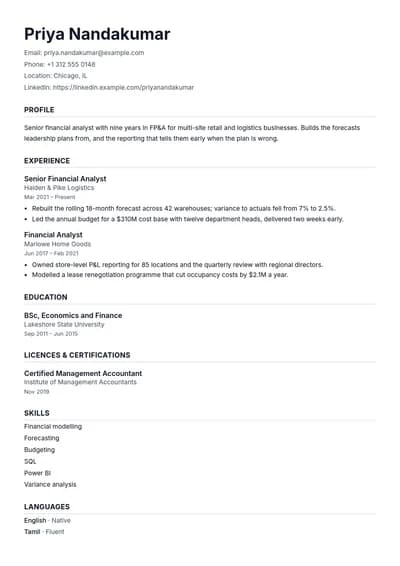
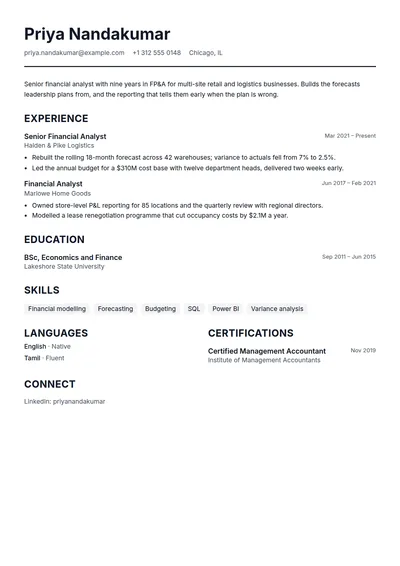
Change the emphasis for each service. A kindergarten association wants collaborative planning and community engagement; a private centre wants reliability across a long day, infant and toddler experience and parent communication; a kōhanga reo or bilingual service wants te reo Māori and tikanga in daily practice; a home-based coordinator role wants mentoring of educators. The US counterpart of this page is the teacher resume example, written for American schools and state certification, which is a different profession from early childhood teaching here. The Civic template keeps a teaching CV plain and easy for a centre manager to read on a phone between sessions.

Updated . The person and employers in this Sample CV are fictional. Written for applicants in New Zealand; the page for applicants in the US is the teacher resume example.

Early Childhood Teacher sample CV

Drawn at A4 proportions, the paper a New Zealand CV is printed on.

Mereana Whitcombe

Early Childhood Teacher (Kaiako), fully certificated, current practising certificate, infants to transition to school

Papanui, Christchurchmereana.whitcombe@example.com021 555 0153

Summary

Fully certificated early childhood teacher with six years across a community kindergarten and a 60-place early learning centre, currently team leader of the over-twos room. Plan from Te Whāriki with a team of four, write learning stories that whānau reply to within the week, and run the centre's transition-to-school programme with the two nearest primary schools. Mentored a provisionally certificated teacher through to full certification, and led the room through an ERO review that returned a long review period. Confident with te reo Māori greetings, waiata and karakia as part of the day, not an add-on.

Experience

Team Leader and Kaiako, Over-Twos Room, Harewood Lane Early Learning Centre

– Present

Papanui, Christchurch

  • Lead a team of four teachers for 30 children aged two to five, planning the fortnightly programme from children's interests and the strands of Te Whāriki, and keeping the certificated-teacher ratio above the funding threshold on every roster.
  • Write and moderate the room's learning stories on the centre's online portfolio, with an expectation that each child has a story every three weeks; whānau responses on the portfolio rose to most families replying each month after I introduced a parent voice section in every story.
  • Built the transition-to-school programme with two local primary schools: termly visits, a shared transition profile for each child, and a new entrant teacher visiting the centre each term.
  • Prepared the room's internal evaluation and documentation for the 2025 ERO review, which placed the service on the longer review cycle and named assessment practice as a strength.
Early Childhood Teacher, Under-Twos and Over-Twos, Puketāhā Community Kindergarten

–

Bishopdale, Christchurch

  • Taught infants and toddlers for two years, then the over-twos, following primary caregiving for the youngest children and the kindergarten's free-flow outdoor programme.
  • Mentored a provisionally certificated teacher for two years, meeting fortnightly and keeping the evidence against the Standards for the Teaching Profession, which the Teaching Council accepted at her first application for full certification.
  • Ran the kindergarten's weekly whānau morning tea and the te reo Māori kete that gave families the words and waiata their children were using at kindergarten.

Education

Bachelor of Teaching (Early Childhood Education)

Southern Plains Institute of Education, Christchurch

Practicum placements in a kindergarten, a full-day centre and a bilingual service; final research project on infant and toddler transitions.

Skills

  • Te Whāriki curriculum planning
  • Learning stories and narrative assessment
  • Internal evaluation for ERO
  • Infant and toddler primary caregiving
  • Transition to school
  • Mentoring provisionally certificated teachers
  • Te reo Māori and tikanga in daily practice
  • Whānau communication and online portfolios
  • Behaviour guidance and inclusion
  • Licensing criteria and health and safety checks
  • First aid and child protection

Certifications

  • Full practising certificate (Tūturu), current, Teaching Council of Aotearoa New Zealand,
  • Police vetting through the Teaching Council, current, New Zealand Police,
  • First Aid for early childhood services, Accredited first aid provider,
Start yours from this example

Opens this sample in the editor, in one of the templates below. Swap in your details, then tailor it to each vacancy in about two minutes.

Use this example

How a New Zealand CV differs

An early childhood teaching CV in New Zealand is built around the Teaching Council and the licensing rules that fund a centre, which is why it reads so differently from the American teacher page it pairs with. The Teaching Council issues the practising certificate, which is provisional for the first two years and full after an induction and mentoring programme; the Ministry of Education licenses each service and funds it on the proportion of certificated teachers on the floor; and ERO reviews the quality of teaching and assessment. A manager wants all three visible on the first page, then the age groups and the curriculum work, in two sides of A4 with referees at the end.

For a early childhood teacher in New Zealand

  1. Certification status in the headline

    Write fully certificated or provisionally certificated and the expiry of your practising certificate. It decides the centre's funding band, and a manager will not read further until they know it.

  2. Age groups and ratios

    Say which rooms you have taught, under-twos or over-twos, how many children and how many teachers. It tells the manager where they can place you and whether you have led a room.

  3. Assessment you can point to

    Name the portfolio platform you use and give a sense of how often each child gets a learning story. Centres are judged on assessment in every ERO review and want teachers who already keep up.

  4. Mentoring and induction

    If you have mentored a provisionally certificated teacher, say so and whether they gained full certification. Services with provisional teachers on staff need mentors and will shortlist you for it.

  5. Safety checking

    The Children's Act safety check includes Police vetting, identity and referee checks. Write that your vetting is current through the Teaching Council, and list your first aid certificate with its expiry.

  6. Te reo and tikanga in practice

    Give an example, such as the waiata and karakia you lead, a kete you built with whānau, or how you pronounce children's names correctly. A line that says culturally responsive on its own is skipped.

Every CV in New Zealand

A4 paper
New Zealand prints on A4. Set the page size before you export; a Letter-sized PDF is the usual sign of a US template.
Two pages is normal
Two pages is the norm. One page for a first job; a third page only for a long senior career.
No photo
No photo, date of birth or marital status. New Zealand employers do not expect them and most prefer the CV without them.
Dates as DD/MM/YYYY
Day first where a full date appears, and month and year for each role. Never the US month-first order.
New Zealand English
New Zealand English follows British spelling: organise, programme, centre, licence, specialise.
Suburb and city, not a street address
"Mount Eden, Auckland" is enough on the contact line. A full street address is not expected.

More on applying in New Zealand, with every CV example for it, on the New Zealand page.

Templates for the early childhood teacher CV

All templates

Every template exports on A4. The previews are drawn on Letter; the editor sets the page size when you export.

How the CV changes with experience

The same early childhood teacher CV, written at three levels: a profile and three bullets for each.

Entry level

Zero to two years, or a first post in the title

Provisionally certificated early childhood teacher with a Bachelor of Teaching and three practicum placements, looking for a first position in a centre that offers a mentor and the induction programme needed for full certification.

  • Completed three practicum placements totalling fourteen weeks across a kindergarten, a full-day centre and a bilingual service.
  • Planned and ran a two-week project on the local awa for twenty children, documented in learning stories the associate teacher used as exemplars.
  • Worked as an unqualified reliever in two centres during the degree, covering infants and toddlers at short notice.

Mid level

Three to seven years, owns a process or a workload

Fully certificated kaiako with five years in infant and toddler rooms, confident with primary caregiving, settling new families and sleep and feeding routines.

  • Primary caregiver for a group of five infants, with daily written and verbal communication to each family.
  • Rewrote the under-twos sleep and nappy change procedures against the licensing criteria after a self-review.
  • Mentor a second-year student on placement each year for the local institute.

Senior

Eight years or more, leads people, budgets or programmes

Head Teacher and Centre Manager with twelve years in early childhood education, responsible for licensing, funding returns, staffing and curriculum across a 75-place centre.

  • Manage a team of fourteen teachers and support staff, including rostering to the certificated ratio, appraisal and professional growth cycles.
  • Hold the licence with the Ministry of Education and complete the funding returns, attestation and annual licensing audit without findings.
  • Led the centre's internal evaluation on inclusion that ERO named as a strength in the most recent review.

Skills to put on the early childhood teacher CV

Hard skills

Te Whāriki planning
Every licensed service must plan from the curriculum, and a manager wants to see you can take children's interests and link them to the strands and learning outcomes without a template doing it for you.
Narrative assessment
Learning stories are what parents read and what ERO samples, and a teacher who writes them well, with the child's voice and the next steps, lifts the whole room.
Infant and toddler practice
Under-twos rooms are the hardest to staff, and experience with primary caregiving, settling and routines makes you easier to place on day one.
Internal evaluation
ERO reviews services on how well they evaluate their own practice, and a teacher who can lead an evaluation cycle is valued beyond their room.
Te reo Māori and tikanga
The Teaching Council standards and Te Whāriki both expect it, and a centre wants a teacher whose te reo is used in the day rather than listed on a wall.
Licensing criteria
Ratios, supervision, sleep checks and hazard checks are what a Ministry visit looks at, and a teacher who knows the criteria keeps the licence safe.

Soft skills

Warmth with whānau
Families choose and stay at a centre because of the teachers, and the manager listens for how you talk about parents as much as children.
Calm in a full room
A wet day with thirty children and a reliever is normal, and the panel wants to hear how you keep the room settled without raising your voice.
Reflective practice
The professional growth cycle asks every teacher to reflect against the standards, and a candidate who talks about what they changed is credible.

Mistakes that cost early childhood teacher interviews

  1. Practising certificate missing or out of date

    A manager checks the Teaching Council register before shortlisting. If the certificate has lapsed or is not mentioned, the CV goes to the bottom of the pile because the centre cannot count you in its ratio.

  2. A primary teaching CV with the word kindergarten added

    Lesson plans, classes and curriculum levels belong to schools. An early childhood CV talks about rooms, age groups, learning stories, Te Whāriki strands and routines, in the language a centre manager uses.

  3. No evidence of planning or assessment

    Engaged children in play describes every day in every centre. Show how you plan from interests, how often you write learning stories, and what an internal evaluation you took part in changed.

  4. Children's names or photos

    Never include a child's name, photo or an identifiable story, even as an example of your assessment. Describe the learning and your role in it; the panel will ask to see a sample story at interview.

  5. Writing it for American preschools

    State licensure, pre-K, lead teacher and US spelling tell a New Zealand manager the CV was written for somewhere else. Use kaiako, the Teaching Council, Te Whāriki and British spelling throughout.

Write bullets with the XYZ formula: what changed, the number that shows it, and how you did it, in one line.

Questions about the early childhood teacher CV

What should an early childhood teacher CV include in New Zealand?

Your qualification and certification status with the practising certificate expiry, the rooms and age groups you have taught with child and teacher numbers, how you plan from Te Whāriki and assess with learning stories, any mentoring or internal evaluation you led, your Police vetting and first aid, and two referees.

How do I show I am provisionally certificated without it counting against me?

Say provisionally certificated, the date you expect to apply for full certification, and what your mentoring and induction have covered so far. Centres need to know whether you need a mentor, and many prefer a provisional teacher who is already well into the programme.

Can I work in early childhood education without a teaching qualification?

Yes, as an unqualified educator or reliever, but the centre cannot count you as a certificated teacher for funding. If you are studying towards the qualification, say which year you are in and when you expect to graduate; many centres hire students into permanent roles ahead of graduation.

How long should a kaiako CV be?

Two sides of A4. A new graduate fits one with the practicum placements described properly; a head teacher or centre manager with licensing and staffing responsibility may run to three, but keep certification and the current role on the first page.

Should I include my teaching philosophy?

A short paragraph of three or four sentences at the top can work if it is specific: what you believe about infants, about whānau, about te reo in the day. A page of philosophy before the manager reaches your experience is too much; most centres ask for it separately.

How do I tailor the CV to a kindergarten association or a private centre?

Read the advert for the words it uses, such as collaborative planning, community, long day, infants and toddlers or bilingual, and lead with the bullets that match. Resume Master takes the advert and rewrites the summary and bullets in its terms in a couple of minutes, so each application fits the service.

Every application goes out fitting the vacancy.

Paste a vacancy, get a CV rewritten for it in about two minutes.

Tailor your CV — free

Free to start. No card. Same price on web, iOS and Android.