Primary Teacher CV Example (Australia)

Principals hiring a Primary Teacher in Australia look for proficient registration with the state teacher regulator, a clear picture of the year levels you have taught, and evidence that your students grew as readers, writers and mathematicians. Open your CV with your registration and Working with Children Check, then show the classes, the programs you run and how you work with families and specialists.

The Sample CV below is for a primary teacher with six years in Queensland state schools, from Prep to Year 4. Her bullets describe explicit teaching of phonics and number, the way she uses assessment to group students, support for students with a disability through adjustments, and her work as the school's literacy contact for the lower years.

Primary is a different job from secondary, and the CV should show it. A secondary teacher is hired for subjects and senior results; a primary teacher is hired for the whole child across every learning area, for classroom routines with young students, and for partnerships with parents. The US counterpart of this page is the teacher resume example, written for American school districts; the Faculty template gives a teaching CV a calm, readable layout.

Updated . The person and employers in this Sample CV are fictional. Written for applicants in Australia; the page for applicants in the US is the teacher resume example.

Primary Teacher sample CV

Drawn at A4 proportions, the paper an Australian CV is printed on.

Annaliese Corbould

Primary Teacher, Full Registration (QCT), Prep to Year 4, Literacy Contact

Springfield Lakes, QLDannaliese.corbould@example.com0491 573 207

Summary

Primary teacher with six years in state schools across Prep to Year 4, fully registered with the Queensland College of Teachers and working at the Proficient career stage. Teach systematic synthetic phonics and number sense explicitly, use regular assessment to plan small-group work, and make adjustments so every student can take part. Lower-years literacy contact for a school of 640 students and a steady partner for families.

Experience

Classroom Teacher, Year 2 and Prep, Ironbark Creek State School

– Present

Springfield Lakes, QLD

  • Teach a class of 24 Year 2 students across all learning areas of the Australian Curriculum, with daily explicit phonics, guided reading in four groups and hands-on number lessons.
  • Use phonics checks and running records each term to regroup students and plan intervention; most of my class moved up at least two reading levels across the 2025 school year.
  • Write and review individual learning plans with the learning support teacher for five students with a disability or learning difficulty, recording the adjustments for the nationally consistent data collection.
  • Lead the lower-years literacy meeting fortnightly as the school's literacy contact, sharing decodable text sets and moderation samples with seven teachers.
Classroom Teacher, Year 3 and Year 4, Paperbark Hill State School

–

Ipswich, QLD

  • Taught composite Year 3 and Year 4 classes, planning units from the school's curriculum plan and differentiating tasks for two year levels in one room.
  • Prepared students for NAPLAN without narrowing the program, using short writing conferences and number talks across the year.
  • Ran the lunchtime gardening club and organised the Year 4 camp, coordinating parent helpers and risk assessments.

Education

Bachelor of Education (Primary)

University of the Brisbane Valley, Brisbane, QLD

Professional experience in Prep, Year 3 and Year 5; final internship of ten weeks in a Year 1 classroom.

Skills

  • Australian Curriculum planning, all learning areas
  • Systematic synthetic phonics
  • Guided and shared reading
  • Number sense and mathematics routines
  • Formative assessment and running records
  • Individual learning plans and adjustments
  • Positive behaviour support
  • Parent communication and conferences
  • OneSchool and class management software
  • Moderation of student work

Certifications

  • Full Registration, Queensland College of Teachers (Proficient), Queensland College of Teachers,
  • Working with Children (exemption through teacher registration), Queensland College of Teachers,
  • Provide First Aid and CPR, with anaphylaxis and asthma management, Nationally recognised training provider,
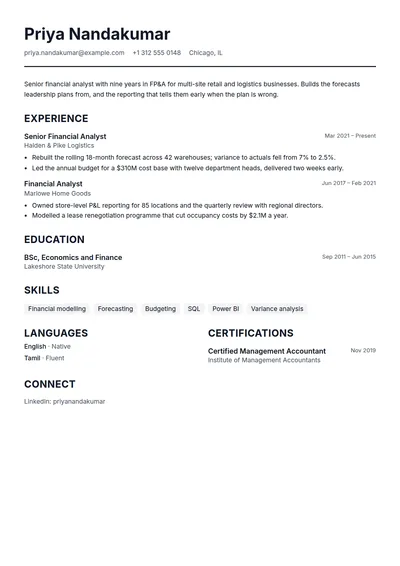
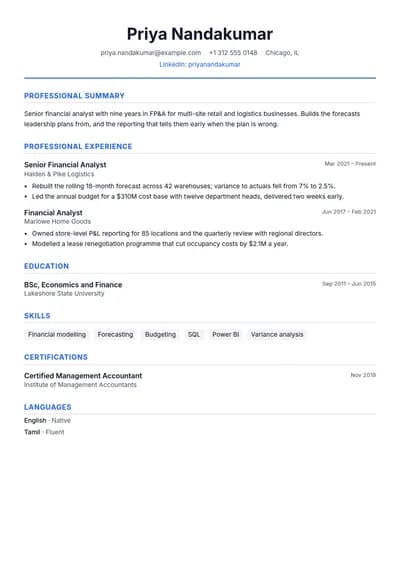
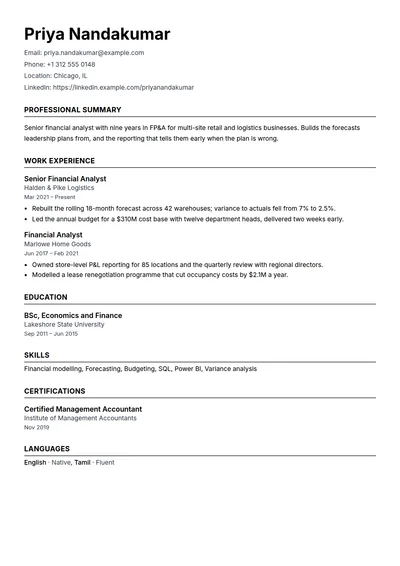
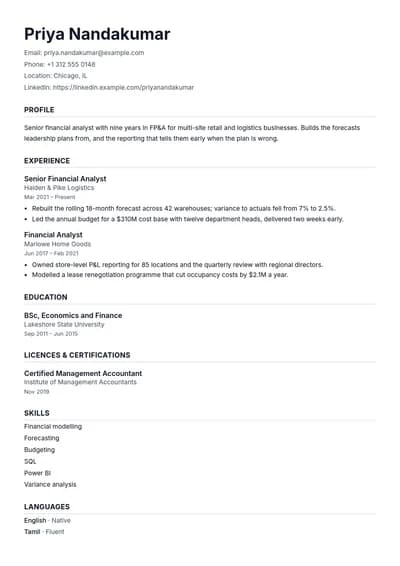
Start yours from this example

Opens this sample in the editor, in one of the templates below. Swap in your details, then tailor it to each vacancy in about two minutes.

Use this example

How an Australian CV differs

A primary teaching CV in Australia is built around registration and the Australian Professional Standards for Teachers, set by AITSL. Teacher registration is state-based, through the Queensland College of Teachers, the Victorian Institute of Teaching, the NSW Education Standards Authority and their equivalents, and moves from provisional to full (Proficient). Applications to state schools often go through an online system with a statement against selection criteria or capabilities, while Catholic and independent schools may ask for a letter about the school's ethos. Keep the CV to two or three pages of A4, with two referees, ideally your principal and a deputy or year-level leader.

For a primary teacher in Australia

  1. Registration and career stage

    Write your registration status, the regulator, the year and whether you are provisional or fully registered at Proficient. A principal checks this first, and in some states it doubles as your working with children clearance.

  2. Year levels, named

    Primary teachers are matched to year levels. Say which you have taught, from Prep, Foundation, Kindergarten or Reception (the first year has a different name in each state) up to Year 6, and note composite classes.

  3. Literacy and numeracy evidence

    Describe how students improved in reading, writing and number using the school's own assessments. You may mention preparing classes for NAPLAN, but do not quote school results as your own.

  4. The Standards in the bullets

    Selection panels often map answers to the AITSL Standards, such as knowing students and how they learn, or planning for effective teaching. Bullets that show these in action make the selection criteria easier to write.

  5. Specialist and extra roles

    Literacy contact, wellbeing lead, sport coordinator or camp organiser are valued in a primary school, where every teacher wears several hats. Name these roles in the job entry.

Every CV in Australia

A4 paper
Australia prints on A4. A Letter-sized PDF prints short on A4 and tells a recruiter the CV came from a US template.
Two to three pages
Australian CVs run longer than UK ones: two pages is normal and three is accepted for experienced applicants. One page suits a first job.
No photo
No photo, date of birth or marital status. Australian employers do not expect them, and anti-discrimination law makes most prefer not to see them.
Dates as DD/MM/YYYY
Day first where a full date appears, month and year for each role. The US month-first order reads wrong to an Australian recruiter.
Australian English
Australian English follows British spelling: organise, programme, centre, licence, specialise.
Suburb and state, not a street address
"Parramatta, NSW" is enough on the contact line. A full address is not expected, and the US-style ZIP line never is.

More on applying in Australia, with every CV example for it, on the Australia page.

Templates for the primary teacher CV

All templates

Every template exports on A4. The previews are drawn on Letter; the editor sets the page size when you export.

How the CV changes with experience

The same primary teacher CV, written at three levels: a profile and three bullets for each.

Entry level

Zero to two years, or a first post in the title

Graduate primary teacher with provisional registration and a ten-week final internship in a Year 1 class, ready to take on a classroom of my own and to work towards full registration with a mentor.

  • Planned and taught a five-week literacy unit on narrative writing during my final internship, assessed against the achievement standard.
  • Ran daily phonics lessons for a small intervention group and tracked their progress on the school's phonics check.
  • Worked as an outside school hours care educator for three years, managing groups of children aged five to twelve after school.

Mid level

Three to seven years, owns a process or a workload

Primary teacher with four years in Catholic and independent schools in Perth, teaching Year 5 and Year 6 with an interest in digital technologies.

  • Teach a Year 6 class of 28 and plan the digital technologies program for the upper years, including coding with block-based tools.
  • Coordinate the Year 6 leadership program and the transition to secondary school with two partner colleges.
  • Mentor a pre-service teacher each year through their professional experience placement.

Senior

Eight years or more, leads people, budgets or programmes

Head of Curriculum (Primary) with fourteen years of teaching, leading the whole-school literacy and numeracy approach in a school of 900 students.

  • Lead the curriculum team in implementing explicit instruction across Prep to Year 6, including coaching and classroom walkthroughs.
  • Analyse school-wide assessment data each term with the leadership team and set targets for intervention groups.
  • Support teachers moving from Proficient towards Highly Accomplished certification, coordinating evidence collection.

Skills to put on the primary teacher CV

Hard skills

Explicit teaching of early reading
Most states now expect systematic phonics in the early years, and principals want to see that you teach it daily and well.
Mathematics and number sense
Strong foundations in number are a priority in every primary school, and concrete routines like number talks are a good sign.
Assessment that drives planning
Running records, phonics checks and work samples are only useful if you regroup and reteach, which a panel will ask about.
Adjustments for diverse learners
Every primary class includes students with a disability or learning difficulty, and documenting adjustments is a legal and professional expectation.
Curriculum planning across learning areas
A primary teacher plans English, maths, science, HASS and more for one class, so breadth matters as much as depth.
Classroom routines with young children
Calm, predictable routines make the rest of the day possible, and principals want to see positive behaviour support in practice.

Soft skills

Partnerships with families
Parents of young children are in and out of the classroom, and a teacher who communicates warmly and clearly keeps them on side.
Collaboration
Year-level teams plan together, and a teacher who shares resources and moderates fairly strengthens the whole team.
Patience and warmth
Young students learn best with an adult they trust, and principals often say this is what they listen for at interview.

Mistakes that cost primary teacher interviews

  1. Registration missing or vague

    A CV that does not say which regulator and which career stage leaves the principal guessing. State it in the headline and the certifications section.

  2. Writing only about duties

    Planned lessons and marked work describe every teacher. Say what changed for your students, which programs you ran and how you used assessment to adjust.

  3. Ignoring the early years

    If you are applying for Foundation or Prep, show your experience with play-based learning, early reading and transition into school, not only upper primary work.

  4. Claiming school data as personal results

    School NAPLAN means are the result of many teachers. Describe your own class's growth on the school's assessments instead.

  5. A one-page US-style document

    A single page with an American spelling of 'program planning' and a state licence line looks out of place. Use two pages of A4, registration, Australian spelling and the year levels.

Write bullets with the XYZ formula: what changed, the number that shows it, and how you did it, in one line.

Questions about the primary teacher CV

What should a primary teacher CV include in Australia?

Your registration and career stage, the year levels you have taught, your literacy and numeracy approach, adjustments for diverse learners, extra roles in the school, professional learning, first aid and two referees.

How long should a primary teaching CV be?

Two pages of A4 for most teachers, three for leaders. Keep registration, your current class and your strongest evidence on the first page.

Should I mention NAPLAN on my CV?

You can say you prepared classes and used the results to plan, but avoid quoting school results as yours. Your own class's growth on reading levels or school assessments is more convincing.

Do I need to address selection criteria for a primary teaching job?

Many state school applications ask for a statement against criteria or capabilities, often linked to the AITSL Standards. Write short examples for each and use your CV bullets as the evidence.

How does a primary teacher CV differ from a secondary one?

Secondary teachers lead with subjects and senior results. Primary teachers lead with year levels, early literacy and numeracy, classroom routines and family partnerships across every learning area.

Can I use the same CV for state and independent schools?

Keep the same core, then adjust the summary to each school's priorities and ethos. Paste the advert into Resume Master and it rewrites the summary and bullets against that school's requirements.

Every application goes out fitting the vacancy.

Paste a vacancy, get a CV rewritten for it in about two minutes.

Tailor your CV — free

Free to start. No card. Same price on web, iOS and Android.