Social Worker CV Example (New Zealand)

Social work in New Zealand has been a registered profession since 2021, so the first thing a team leader looks for on a Social Worker CV is registration with the Social Workers Registration Board and a current practising certificate. The second is the setting and the statute you work under, because a hospital social worker, a care and protection social worker and a community mental health social worker carry different caseloads and answer to different legislation. The third is how you work with Māori and Pacific whānau, which the Board's core competence standards make part of the job rather than an extra.

The Sample CV below is for a registered social worker with six years in Dunedin, first in a Māori health provider's whānau service and now in a hospital social work team covering the older persons' and medical wards. His bullets show the work a team leader needs to see: safe discharge for frail older people, family meetings run with the whānau's own process, elder abuse responses, reports of concern under the Oranga Tamariki Act, supervision given and received, and a hui-based approach to planning that the team adopted.

Shift the emphasis for each employer. Te Whatu Ora hospital teams want discharge planning and multidisciplinary work; Oranga Tamariki and iwi social services want care and protection, family group conferences and court work; community mental health wants recovery planning and the Mental Health Act; NGOs want flexibility and funding reports. The US counterpart of this page is the social worker resume example, written for American agencies and state licensure; the Civic template keeps a registered social worker's CV plain for public sector application portals.

Updated . The person and employers in this Sample CV are fictional. Written for applicants in New Zealand; the page for applicants in the US is the social worker resume example.

Social Worker sample CV

Drawn at A4 proportions, the paper a New Zealand CV is printed on.

Wiremu Pascoe

Registered Social Worker, SWRB practising certificate current, hospital and whānau practice

North East Valley, Dunedinwiremu.pascoe@example.com027 555 0155

Summary

Registered social worker with six years across a Māori health provider's whānau service and a hospital social work team in Dunedin, holding a current SWRB practising certificate and Police vetting. Carry a caseload of 18 to 22 patients on the older persons' and general medical wards, run family meetings that follow the whānau's tikanga, respond to elder abuse and self-neglect, and supervise two first-year social workers. Brought a hui-based planning approach from the whānau service into the hospital team, now used for complex discharges across both wards.

Experience

Social Worker, Older Persons' Health and General Medicine, Southern Lakes Community Health, hospital social work team

– Present

Dunedin

  • Hold a caseload of 18 to 22 patients across the older persons' and general medical wards, completing psychosocial assessments, interRAI referrals and capacity concerns with the geriatrician and the needs assessment service.
  • Plan complex discharges with the ward team and whānau, including applications for aged residential care, home support packages and enduring power of attorney conversations, so that patients leave hospital to a place that will hold.
  • Respond to elder abuse and self-neglect concerns with a safety plan, referrals to the elder abuse response service and the Police where needed, and documentation that has been used in Family Court protection applications.
  • Introduced a hui-based planning meeting for complex discharges, opened with karakia and led by the whānau's spokesperson, which the team adopted across both wards and the charge nurse credits with fewer failed discharges.
Whānau Ora Social Worker, Kōwhai Whānau Services

–

South Dunedin

  • Worked alongside 25 to 30 whānau at a time on housing, income, family harm and care and protection concerns, using whānau-led planning and a kaupapa Māori practice model.
  • Made reports of concern to Oranga Tamariki where children were unsafe and sat in family group conferences as the whānau's support person, with most plans keeping tamariki with their wider whānau.
  • Completed the SWRB's competence assessment and the provider's cultural supervision programme, and began supervising a social work student on placement each year.

Education

Bachelor of Social Work

Clutha Coast University, Dunedin

Field placements of 120 days in a community mental health team and a youth justice service; final-year research on whānau participation in hospital discharge.

Skills

  • Psychosocial assessment
  • Discharge planning and interRAI referral
  • Whānau hui and family meetings
  • Elder abuse and safeguarding response
  • Reports of concern and family group conferences
  • Capacity, EPOA and Protection of Personal and Property Rights Act processes
  • Kaupapa Māori practice and Te Tiriti o Waitangi
  • Professional and cultural supervision
  • Court reports and affidavits
  • Clinical records and case notes

Certifications

  • Registered Social Worker, practising certificate current, Social Workers Registration Board,
  • Police vetting and Children's Act safety check, current, New Zealand Police and employer,
  • Supervision training for social workers, Accredited training provider,
  • Full driver licence, Waka Kotahi NZ Transport Agency,
Start yours from this example

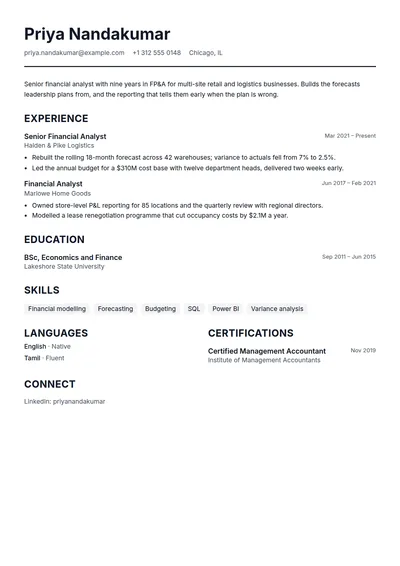
Opens this sample in the editor, in one of the templates below. Swap in your details, then tailor it to each vacancy in about two minutes.

Use this example

How a New Zealand CV differs

A New Zealand social work CV is organised around registration, which became mandatory in 2021, and around the legislation of the setting, which is why it reads differently from the American page it pairs with. Registration is with the Social Workers Registration Board, renewed through an annual practising certificate and continuing professional development against the core competence standards, which include competence to work with Māori and with different ethnic and cultural groups. Safety checking under the Children's Act, Police vetting and a driver licence are expected for most roles. Two sides of A4, sometimes three for a senior practitioner, with two referees at the end.

For a social worker in New Zealand

  1. SWRB registration and practising certificate

    Write registered social worker, the year you registered and that your practising certificate is current. A provisional registration or a competence assessment in progress is fine to say; silence is not.

  2. The statute you work under

    Name the Act for each setting: the Oranga Tamariki Act for care and protection and youth justice, the Mental Health Act for community mental health, the PPPR Act and interRAI for older persons' health. It tells the reader your scope at a glance.

  3. Practice with Māori, shown not claimed

    Give the kaupapa Māori service you worked alongside, the hui you ran, the cultural supervision you had or the te reo you use with whānau. The competence standard asks for evidence, and so does the panel.

  4. Caseload numbers and complexity

    Say how many patients, whānau or tangata whaiora you carry and what makes the work complex: court involvement, capacity, family harm, homelessness. It is how a team leader places you.

  5. Safety checks and a driver licence

    Children's Act safety checking, Police vetting and a full driver licence are required for most community roles. List them with the year in the certifications block so the recruiter can tick them off.

  6. Supervision given and received

    State your current supervision arrangement and any supervision training. A team with first-year social workers needs supervisors and will shortlist for it.

Every CV in New Zealand

A4 paper
New Zealand prints on A4. Set the page size before you export; a Letter-sized PDF is the usual sign of a US template.
Two pages is normal
Two pages is the norm. One page for a first job; a third page only for a long senior career.
No photo
No photo, date of birth or marital status. New Zealand employers do not expect them and most prefer the CV without them.
Dates as DD/MM/YYYY
Day first where a full date appears, and month and year for each role. Never the US month-first order.
New Zealand English
New Zealand English follows British spelling: organise, programme, centre, licence, specialise.
Suburb and city, not a street address
"Mount Eden, Auckland" is enough on the contact line. A full street address is not expected.

More on applying in New Zealand, with every CV example for it, on the New Zealand page.

Templates for the social worker CV

All templates

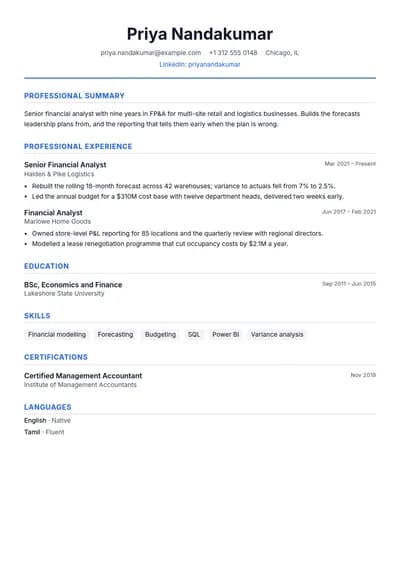
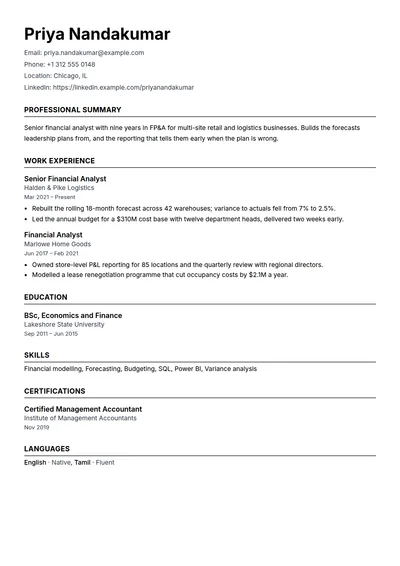
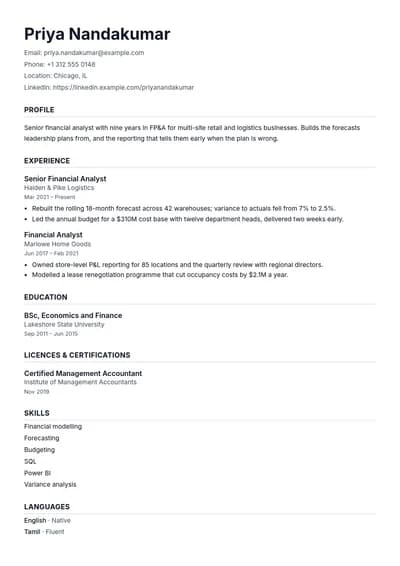
Every template exports on A4. The previews are drawn on Letter; the editor sets the page size when you export.

How the CV changes with experience

The same social worker CV, written at three levels: a profile and three bullets for each.

Entry level

Zero to two years, or a first post in the title

New graduate social worker with a recognised degree, provisional SWRB registration and two placements, one in a community mental health team and one in a youth justice service, applying for a first position in health or care and protection.

  • Completed 60 days in a community mental health team, carrying a small caseload under supervision and co-facilitating a whānau education group.
  • Completed 60 days in a youth justice service, preparing family group conference plans and attending Youth Court with the supervising social worker.
  • Worked as a youth worker in an after-school programme for two years during the degree.

Mid level

Three to seven years, owns a process or a workload

Registered social worker with four years in a community mental health team in Auckland, carrying a recovery-focused caseload under the Mental Health Act.

  • Key worker for 28 tangata whaiora with recovery plans, housing and income support and crisis planning.
  • Duly authorised officer, completing assessments and applications under the Mental Health Act.
  • Co-lead the team's whānau engagement group with the Māori mental health service.

Senior

Eight years or more, leads people, budgets or programmes

Senior Social Worker and team leader with twelve years of practice, leading a hospital social work team of nine and the service's elder abuse response.

  • Lead and supervise nine social workers across inpatient, emergency and outpatient services, including professional supervision and practising certificate renewals.
  • Wrote the district's elder abuse response procedure and the training for ward staff.
  • Represent social work on the hospital's patient flow and clinical governance groups.

Skills to put on the social worker CV

Hard skills

Assessment that holds up
A team leader reads your assessment before anything else happens for the patient or whānau, and one that is thorough, plain and timely is what gets you trusted with the complex cases.
Discharge planning
Te Whatu Ora hospitals measure length of stay and readmission, and a social worker who gets frail patients home or into care safely is central to patient flow.
Care and protection law
The Oranga Tamariki Act, reports of concern and family group conferences come up in health, education and NGO settings, not only at Oranga Tamariki, and a team wants someone who knows the thresholds.
Kaupapa Māori practice
The SWRB competence standards require practice with Māori, and an employer wants evidence of working alongside whānau and kaupapa services rather than a sentence about respect.
Capacity and adult protection
EPOA, the PPPR Act and elder abuse responses come up weekly in older persons' health, and knowing the processes keeps patients safe and the team out of trouble.
Supervision
The Board expects regular supervision for every registered social worker, and a candidate who has given it is useful to a team with new graduates.

Soft skills

Building trust fast
Whānau meet you on the worst week of their year, and the ability to be straight and warm in the first ten minutes decides whether the plan is theirs.
Holding a room
A family meeting with six relatives, a doctor and a nurse can go sideways, and a team leader listens for how you keep it on the patient.
Looking after yourself
Caseloads carry grief and risk, and employers want social workers who use supervision, take leave and stay in the profession.

Mistakes that cost social worker interviews

  1. Registration not stated

    Since 2021 nobody can use the title without SWRB registration, and a team leader checks the register before anything else. Put it in the headline and the certifications block with the year.

  2. Tasks instead of practice

    Case management and home visits describe the job, not you. Show the assessment, the decision and what changed for the patient or whānau, in bullets the panel can ask you about.

  3. A paragraph on cultural competence with no example

    Every CV says it. Give the hui, the service, the cultural supervision or the plan that kept tamariki with their wider whānau, and let the interview ask about it.

  4. Identifiable stories

    Nothing that could identify a patient, child or whānau, even in a cover letter example. A panel reads that as a confidentiality risk, which is a registration matter.

  5. Writing it for American licensure

    An LCSW licence, a one-page layout and US spelling tell a New Zealand team leader the CV was written for somewhere else. Use SWRB, the Act for your setting and British spelling.

Write bullets with the XYZ formula: what changed, the number that shows it, and how you did it, in one line.

Questions about the social worker CV

Do I need to be registered to work as a social worker in New Zealand?

Yes. Since 2021 the title is protected and employers must employ registered social workers in social work roles. Write your registration, the year and that your practising certificate is current; new graduates can say provisional registration applied for.

What does a New Zealand social work CV need on the first page?

SWRB registration and practising certificate, your recognised degree, each setting with the statute and the caseload, evidence of practice with Māori and Pacific whānau, supervision, safety checks and a driver licence, and two referees, usually your current supervisor and a previous team leader.

How long should a social work CV be?

Two sides of A4 for most practitioners. Keep registration, the current role and the safety checks on the first page; a senior practitioner or team leader with several services may need a third.

What can a new graduate put on a social work CV before provisional registration?

Give each placement its own entry with the setting, the days and what you did under supervision, then any paid youth, disability or community work. Name the settings you want to work in and say when your registration will be confirmed.

How do I move from care and protection to hospital social work?

Lead with assessment, family meetings, risk and safety planning and working across professions, and add any health experience from placements. Address the position description's competencies on discharge planning and multidisciplinary work directly.

Should I tailor the CV to Te Whatu Ora, Oranga Tamariki and NGO roles separately?

Yes, because each uses different language and law. Resume Master takes the advert and the position description and rewrites your summary and bullets in those terms, so each application reads as written for that service.

Every application goes out fitting the vacancy.

Paste a vacancy, get a CV rewritten for it in about two minutes.

Tailor your CV — free

Free to start. No card. Same price on web, iOS and Android.