Audio Engineer Resume Example

Studios, venues and podcast companies hire audio engineers they can put in a room with a client and forget about. The resume should show that you know the gear and the software, that sessions run on time with you at the desk, and that the finished audio is ready to release.

The Sample resume below belongs to an audio engineer with six years of experience between a recording studio and a podcast production company. Bullets describe sessions and projects in concrete terms: what was recorded, how many tracks or episodes, the room and the console, and what happened to the work afterward, such as a release, a chart placement or a show renewal. The skills list is detailed on purpose, because engineers are often screened on specific tools.

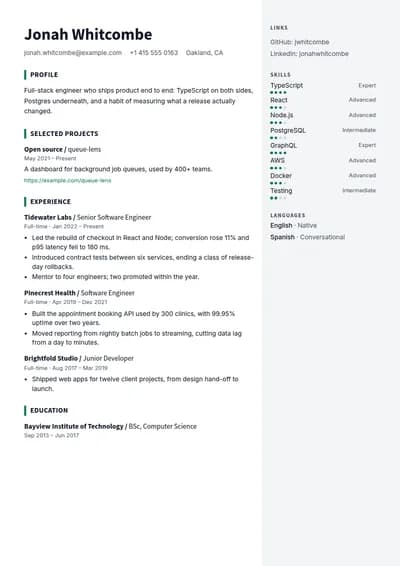
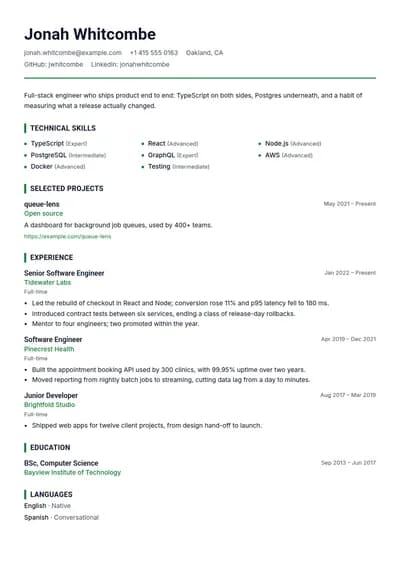
For studio roles, lead with recording and mixing credits. For live sound, lead with venues, crowd sizes and systems. For podcasts and post, lead with episode volume, dialogue editing and loudness standards. If you also cut picture, the video editor example shows how to present that work, and the Stack template puts a long tools list where a technical reviewer expects it.

Updated . The person and employers in this Sample resume are fictional.

Audio Engineer sample resume

Rico Albanese

Audio Engineer, Recording, Mixing and Podcast Production

Nashville, TNrico.albanese@example.com(615) 555-0166

Summary

Audio engineer with six years of experience recording and mixing music and producing podcasts. Engineered sessions for more than forty independent albums and EPs, and now runs audio for a network of eight weekly shows. Fluent in Pro Tools and large-format consoles, calm with artists and producers, and strict about file organization and delivery specs.

Experience

Senior Audio Engineer, Canebrake Podcast Studio

– Present

Nashville, TN

  • Record, edit and mix eight weekly interview and narrative shows, delivering about thirty episodes a month to loudness and format specs.
  • Built remote recording kits and a guest checklist that brought unusable remote audio down to almost none.
  • Designed a mix template and noise-reduction chain that cut average edit time per episode from five hours to three.
  • Train two assistant engineers on session setup, dialogue editing and final QC.
Recording Engineer, Low Hollow Recording

–

Nashville, TN

  • Engineered tracking sessions for more than forty independent albums and EPs across country, folk and rock.
  • Mixed six full-length records, including one that reached the top ten of a national independent radio chart.
  • Set up and maintained microphones, outboard gear and the studio's 32-channel console, logging repairs and recalls.
  • Scheduled and ran up to twelve sessions a week, keeping bookings on time for artists paying by the hour.

Education

Diploma in Audio Engineering and Production

Harpeth Valley Audio Institute, Nashville, TN

Skills

  • Pro Tools
  • Logic Pro
  • iZotope RX
  • Large-format analog consoles
  • Microphone selection and placement
  • Tracking and overdubs
  • Mixing
  • Dialogue editing
  • Loudness standards (LUFS)
  • Signal flow and patchbays
  • Remote recording
  • Session file management
  • Live sound basics
  • Studio maintenance

Certifications

  • Pro Tools Certified User, Avid Technology,
Start yours from this example

Bring your own resume or start blank, then tailor it to each posting in about two minutes.

Use this example

Templates for the audio engineer resume

All templates

How the resume changes with experience

The same audio engineer resume, written at three levels: a summary and three bullets for each.

Entry level

Zero to two years, or a first role in the title

Audio program graduate and studio assistant with a year of experience setting up sessions, running Pro Tools and editing podcast episodes.

  • Set up microphones and patched the console for three to five sessions a week as a studio assistant.
  • Edited dialogue for a weekly podcast, delivering episodes to the producer on schedule.
  • Recorded and mixed a five-song EP for a local band as a final school project.

Mid level

Three to seven years, owns a process or a workload

Audio engineer with four years of experience recording and mixing in a commercial studio, trusted to run sessions alone.

  • Run tracking and overdub sessions for independent artists several days a week.
  • Mix singles and EPs for release on streaming platforms.
  • Maintain the studio's microphones and outboard gear.

Senior

Eight years or more, leads people, budgets or programs

Chief engineer with twelve years of experience managing studio operations, mixing major projects and training engineers.

  • Run a three-room studio's technical operations, including equipment budgets and repairs.
  • Mixed albums for artists on national labels and several film soundtracks.
  • Hire and train the studio's engineers and interns.

Skills to put on the audio engineer resume

Hard skills

Pro Tools (and the DAW the posting names)
Studios run on a specific DAW, and fluency in it is the first thing screened for.
Microphone technique
Good recordings start at the source, and engineers who choose and place mics well save hours in the mix.
Mixing
Mixing credits are often what separate engineers who run sessions from engineers artists ask for by name.
Signal flow and troubleshooting
When something stops working mid-session, the engineer who finds the fault quickly keeps the client happy.
Dialogue editing and noise reduction
Podcast and post work depend on clean speech, and tools such as iZotope RX are named in many postings.
Delivery standards
Streaming services, broadcasters and podcast platforms have loudness and format rules, and meeting them avoids rejected files.

Soft skills

Working with artists
A relaxed, focused session gets better performances, and artists return to engineers they trust.
Time management
Clients often pay by the hour, so sessions that start and end on time matter to them.
Attention to detail
A clipped take or a missing file can cost a whole session, and careful engineers catch it before it matters.

Mistakes that cost audio engineer interviews

  1. A gear list with no credits

    Listing every microphone you have used does not show what you produced. Lead with the records, shows or events you worked on, then list the tools that matter for the job.

  2. Not saying what you did on a project

    Tracking, mixing, mastering and assisting are different roles. Say which one you did for each credit so a studio manager knows what to expect.

  3. Leaving out volume

    Sessions per week, episodes per month or shows per season tell employers how much work you can handle. Include those numbers.

  4. No link to listen

    Add a short link to mixes or episodes you engineered, with a note on your role in each one. Engineers are hired partly by ear.

  5. Ignoring live or post experience

    If you have run a live board or edited dialogue for video, include it. Many audio jobs mix studio, live and post work.

Questions about the audio engineer resume

What should an audio engineer put on a resume?

Your credits and role on each, the software and equipment you know, the volume of work you handle and a link to listen. Add certifications such as Pro Tools if you have them.

Is an audio engineer resume different for live sound?

Yes. Lead with venues, event sizes, the consoles and PA systems you ran, and your role on the crew. Studio credits can follow in a shorter section.

Do audio engineers need a degree?

Many studios hire from audio programs, apprenticeships or assistant roles. A strong list of credits and a good listening link usually matter more than the degree.

Should I include podcast work on a music engineering resume?

Yes. Podcast work shows reliable deadlines, dialogue editing and delivery standards, which are useful in any studio.

How do I show results as an audio engineer?

Mention releases, chart placements, shows renewed, time saved on edits and clients who returned. Those are the outcomes studio managers remember.

Every application goes out fitting the job.

Paste a posting, get a resume rewritten for it in two minutes.

Tailor your resume — free

Free to start. No card. Same price on web, iOS and Android.