Support Worker CV Example (UK)

A Support Worker in supported living is hired to help adults with a learning disability or autism live the life they choose in their own home: cooking, budgeting, getting to college or work, seeing friends, managing health appointments. Registered managers read the CV for evidence that you work from the person's support plan rather than doing things for them, that you stay calm and consistent when someone is distressed, and that your recording would stand up in a CQC inspection.

The Sample CV below is for a Support Worker with five years in supported living services in the East Midlands, the last two as a shift lead in a shared house for four tenants. Its bullets show the outcomes a tenant reached with support, the positive behaviour support approach used, medication and finance responsibilities, and the Level 3 Diploma that marks someone ready to step up to senior.

Tailor it to each service. A forensic or complex needs service wants restrictive practice reduction and PBS training; an outreach service wants lone working and travel; a children's residential home wants Ofsted and the Children's Homes Regulations. The US counterpart of this page is the caregiver resume example, written for home care agencies in the United States; the Civic template keeps the CV plain for council and charity recruitment portals.

Updated . The person and employers in this Sample CV are fictional. Written for applicants in the UK; the page for applicants in the US is the caregiver resume example.

Support Worker sample CV

Drawn at A4 proportions, the paper a UK CV is printed on.

Rhiannon Elsworth

Support Worker and Shift Lead, Learning Disabilities and Autism, Supported Living

Long Eaton, NG10rhiannon.elsworth@example.com07700 900412

Summary

Support Worker with five years in supported living for adults with learning disabilities and autism, the last two leading shifts in a four-tenant shared house. Work from person-centred and PBS plans, keep restrictive practice to the minimum and write daily notes a CQC inspector could follow. Level 3 Diploma in Adult Care and a full UK driving licence.

Experience

Support Worker and Shift Lead, Trentmere Supported Living

– Present

Long Eaton, NG10

  • Lead day and sleep-in shifts in a shared house for four tenants with learning disabilities, allocating support hours, handing over and covering on-call when the manager is away.
  • Supported one tenant from needing two staff in the community to travelling alone by bus to a supported internship three days a week, using a travel plan built in small steps with his family and the speech and language therapist.
  • Co-wrote a tenant's positive behaviour support plan with the PBS practitioner; the house logged no physical interventions for her in the following eight months, down from several a month.
  • Administer medication on the MAR chart, including PRN protocols and controlled drugs, and complete the weekly medication audit with no unexplained gaps since I took it over.
Support Worker, Ashlow Community Living

–

Beeston, NG9

  • Provided one-to-one outreach support to six adults living in their own flats, covering budgeting, shopping, cooking, tenancy letters and GP and hospital appointments.
  • Helped a tenant with a mild learning disability prepare for and attend her annual health check and a dental treatment she had avoided for years, using easy-read guides and a desensitisation plan.
  • Recorded daily notes and incident reports on the provider's electronic care system and raised two safeguarding concerns through the local authority referral route.
Day Service Assistant, Copsewood Day Opportunities

–

Ilkeston, DE7

  • Supported groups of adults with profound and multiple learning disabilities in sensory, art and cooking sessions, including personal care and PEG feeding under training.
  • Used Makaton and picture schedules with people who do not use speech.

Education

Level 3 Diploma in Adult Care

Fernhollow College of Further Education, Loughborough, LE11

Units in person-centred practice, safeguarding, the Mental Capacity Act and supporting positive behaviour.

A levels: Psychology, Sociology, English Literature

Lockington Brook Sixth Form, Castle Donington, DE74

Skills

  • Person-centred support planning
  • Positive behaviour support (PBS)
  • Medication administration and MAR charts
  • Mental Capacity Act and DoLS
  • Safeguarding adults
  • Makaton and visual supports
  • Tenant finances and record keeping
  • Lone working and on-call
  • Electronic care records
  • Full UK driving licence

Certifications

  • The Care Certificate, Skills for Care standards, completed in post,
  • Oliver McGowan Mandatory Training on Learning Disability and Autism, Tier 2, Health Education England curriculum,
  • Restrictive practice reduction and physical intervention, RRN-certified course, Trentmere Supported Living,
Start yours from this example

Opens this sample in the editor, in one of the templates below. Swap in your details, then tailor it to each vacancy in about two minutes.

Use this example

How a UK CV differs

A UK Support Worker CV is read by a registered manager in a regulated social care service, not by a US-style home care agency. The service is registered with the Care Quality Commission in England, the Care Inspectorate in Scotland or Care Inspectorate Wales, and the manager is thinking about inspection, commissioners and the tenants' families as they read. Many providers also use an application form with a values-based section, so the CV is often the evidence behind the form rather than the whole application.

For a support worker in the UK

  1. Name the client group and the setting

    Say learning disabilities, autism, mental health or acquired brain injury, and whether the service is supported living, residential, outreach or a day service, so your CV matches the advert.

  2. Qualifications in the UK framework

    List the Care Certificate, then your Level 2 or Level 3 Diploma in Adult Care or Health and Social Care with the year. A Level 3 is the usual marker for a senior or shift lead role, so show it if you have it or are working towards it.

  3. Mandatory and specialist training with dates

    Oliver McGowan training, safeguarding adults, medication, the Mental Capacity Act and any certified restrictive practice course are checked at interview. Give the year so the manager knows what needs refreshing.

  4. DBS and driving

    Say you hold an Enhanced DBS check for the adult workforce and whether you are on the Update Service. A full UK driving licence and access to a car widen the services you can work in, so put it in the summary when the advert asks.

  5. Outcomes, not tasks

    Write what someone achieved with your support, such as travelling alone, starting a course or reducing incidents, rather than a list of duties. It is the language CQC and commissioners use, and managers notice it.

  6. Privacy of the people you support

    Never name a tenant or give details that could identify them. Describe the support in general terms, and say you can talk through examples at interview.

Every CV in the UK

A4 paper
Set the page to A4, 210 by 297 millimetres. A Letter-sized PDF prints with odd margins on A4 and reads as imported from the US.
Two pages is normal
Most UK CVs run to two pages. One page suits a first job; three is rare and only for senior roles with a lot to show.
No photo, no date of birth
UK employers do not expect a photo, a date of birth, marital status or nationality on a CV, and most prefer not to see them.
Dates as DD/MM/YYYY
Day first where a full date appears, and month and year for each role: "Mar 2022 – Present". Never the US month-first order.
British English
Organise, programme, centre, licence, specialise. A CV in American spelling reads as written for somewhere else.
Town and postcode area, not a street address
A line such as "Manchester, M4" is enough. A full postal address, and the US-style "City, ST 12345" line, are not expected.

More on applying in the UK, with every CV example for it, on the UK page.

Templates for the support worker CV

All templates

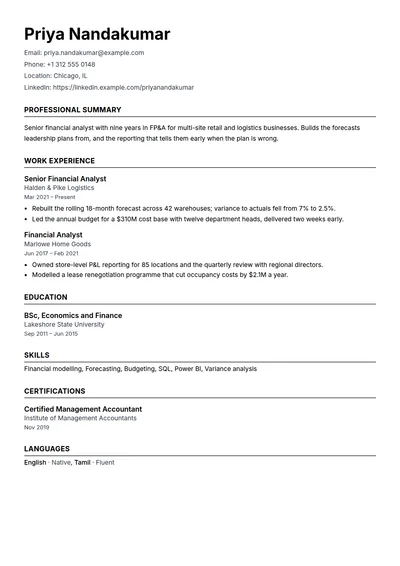
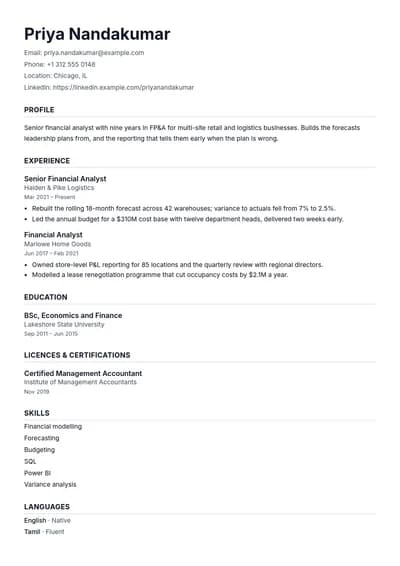
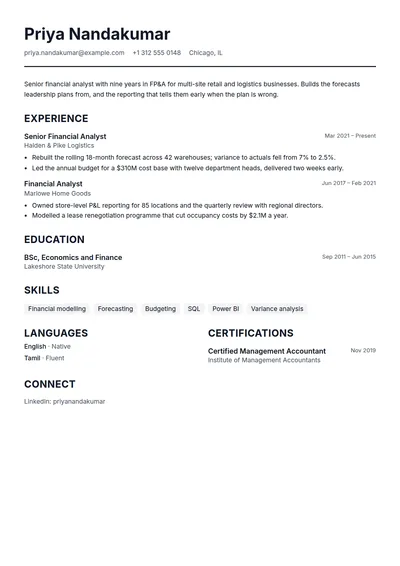
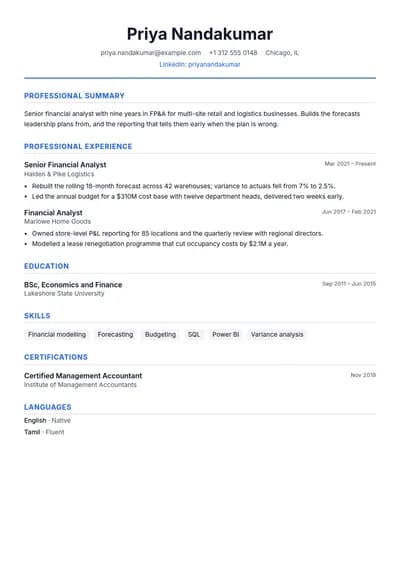
Every template exports on A4. The previews are drawn on Letter; the editor sets the page size when you export.

How the CV changes with experience

The same support worker CV, written at three levels: a profile and three bullets for each.

Entry level

Zero to two years, or a first post in the title

Caring and patient newcomer to support work with experience supporting a younger brother with autism and two years of weekend work in a café that employs adults with learning disabilities. Ready to complete the Care Certificate and learn from an experienced team.

  • Worked alongside supported employees at a social enterprise café, breaking tasks into steps and keeping a calm, predictable routine on busy Saturdays.
  • Volunteered at a weekly youth club for disabled teenagers, planning activities and helping with personal care under supervision.
  • Completed safeguarding and first aid courses before applying.

Mid level

Three to seven years, owns a process or a workload

Support Worker with three years in a complex needs service for autistic adults with behaviours that challenge, trained in PBS and restrictive practice reduction.

  • Support two autistic men with high support needs on a two-to-one staffing ratio, following detailed PBS and sensory plans.
  • Collect ABC data for the behaviour specialist and contributed to a plan that reduced restrictive interventions.
  • Mentor new starters through their Care Certificate shadow shifts.

Senior

Eight years or more, leads people, budgets or programmes

Senior Support Worker and deputy manager with ten years in supported living, responsible for a team of 18 across three services and for preparing them for CQC inspection.

  • Deputise for the registered manager across three supported living houses, covering rotas, supervisions and audits.
  • Led the services through a CQC inspection rated Good in every key question.
  • Introduced a monthly outcomes review with each tenant and their circle of support.

Skills to put on the support worker CV

Hard skills

Person-centred support planning
Every service is inspected on whether support follows the person's plan and wishes, so a manager wants proof you read, follow and help update it.
Positive behaviour support
PBS is the expected approach for people whose behaviour challenges services, and it is named in most learning disability adverts.
Medication administration
Most supported living roles administer medication, and a clean MAR record is one of the first things a manager checks at induction.
Mental Capacity Act and safeguarding
Support Workers make daily decisions about choice and risk, and knowing when capacity is assumed and when to raise a concern keeps people and staff safe.
Communication without speech
Makaton, visual schedules and objects of reference let you support people who do not use words, and services list them as desirable skills.
Recording and reporting
Daily notes, incident forms and finance logs are evidence for CQC and families, so clear writing matters.

Soft skills

Patience and consistency
Progress for the people you support often comes in small steps over months, and a steady approach is what makes those steps possible.
Respect for independence
The job is to support people to do things themselves, and managers listen for whether you step back rather than take over.
Calm under pressure
Distress and incidents happen, and a manager wants to hear how you de-escalated and kept everyone safe.

Mistakes that cost support worker interviews

  1. A list of care tasks with no outcomes

    Personal care, cooking and cleaning describe the day but not the difference you made. Pick two or three people's progress and describe the steps and the result without identifying them.

  2. Doing for, not doing with

    Bullets such as cooked meals for residents suggest you take over. Write supported a tenant to plan and cook three meals a week instead; managers recruit for that mindset.

  3. Leaving out PBS and restrictive practice

    If you have supported someone whose behaviour challenges, say what approach you used and what training you hold. It is the most asked-about topic in complex needs interviews.

  4. Identifying the people you support

    A first name, a diagnosis and a town can be enough to identify someone. Keep examples general on the CV; a breach of confidentiality on a CV is a warning sign to any manager.

  5. No dates on training

    Medication and safeguarding training expire. Without a year, the manager assumes it lapsed and budgets for you to redo it, which can count against you on a tight shortlist.

Write bullets with the XYZ formula: what changed, the number that shows it, and how you did it, in one line.

Questions about the support worker CV

What should a Support Worker put in a CV personal statement?

Three or four lines naming the client group and setting you have worked in, your approach (person-centred, PBS), your highest care qualification and practical details such as driving and sleep-ins. Leave the story of why you care for the cover letter.

Do I need qualifications to become a Support Worker?

No. Most providers recruit on values and train you through the Care Certificate in your first weeks, then support a Level 2 or Level 3 Diploma. Show any caring experience, paid or unpaid, and your willingness to train.

How do I show positive behaviour support on a CV?

Name the training you hold, the role you played in a PBS plan, such as collecting data or co-writing proactive strategies, and the change it made, described without identifying the person.

Should I list sleep-ins and waking nights?

Yes. Many supported living rotas need them, and saying you are happy to cover them and have done so before answers a question the manager would otherwise ask at interview.

How long should a Support Worker CV be?

Two pages of A4 at most. A newcomer fits one page; an experienced worker with a Level 3, specialist training and shift lead duties uses two. Keep the most recent role and the qualifications on the first page.

How do I tailor my CV for a complex needs or forensic service?

Move PBS, restrictive practice training and experience with incidents to the top, and use the words in the advert. Paste the advert into Resume Master and it rewrites the CV against it in about two minutes.

Every application goes out fitting the vacancy.

Paste a vacancy, get a CV rewritten for it in about two minutes.

Tailor your CV — free

Free to start. No card. Same price on web, iOS and Android.